
I know this one will rub bag holders the wrong way, however I'm here to deliver hard truths, not stroke egos.
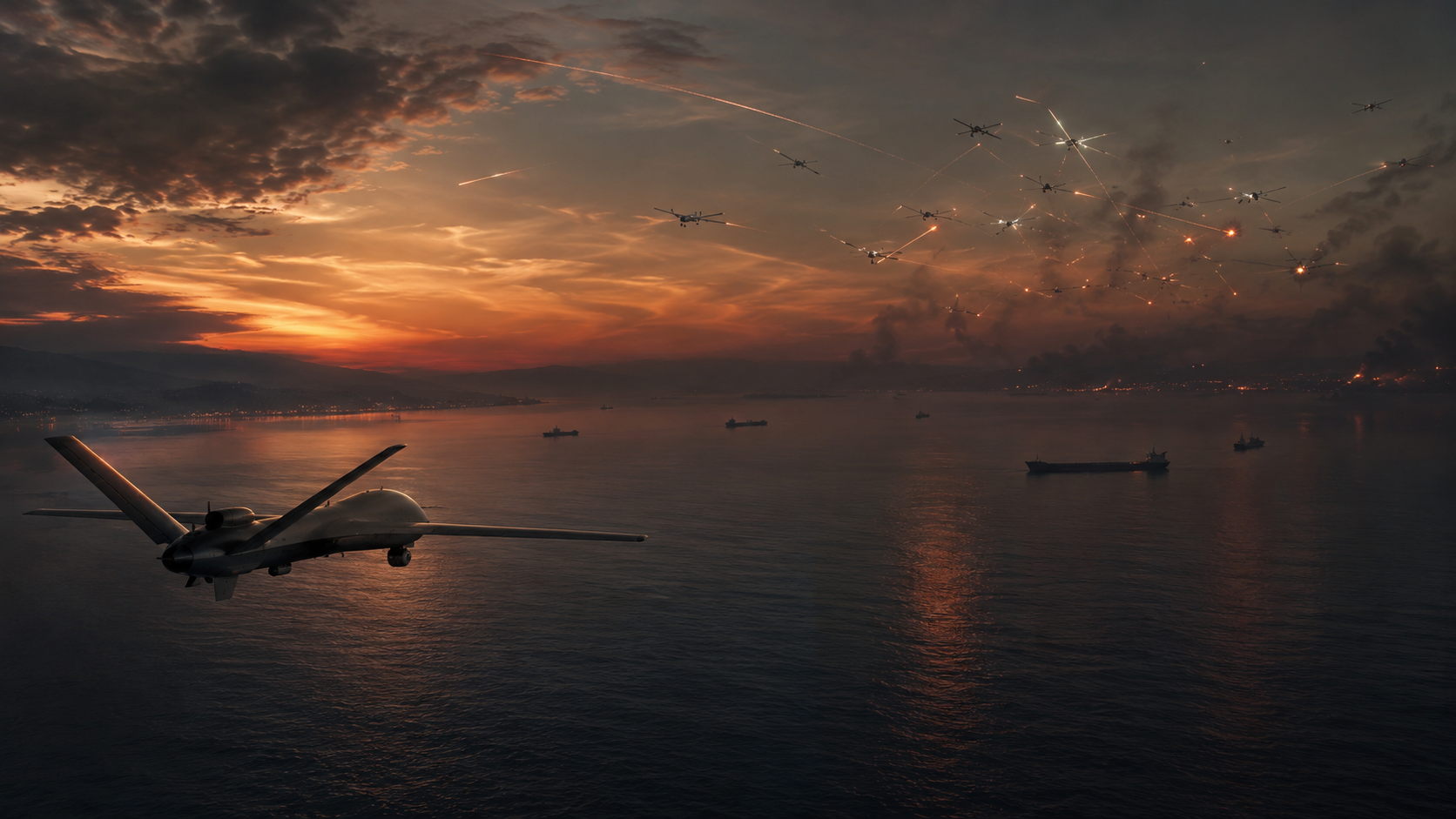
The Iran war was the biggest live test drone warfare has ever gotten. The money that came out of it went to the military giants and to private startups. The retail drone names were tossed crumbs.
The News
Drone warfare is part of the new age in war. A robotic military will likely be the new future of fighting.
What does this have to do with drone stocks?
According to Forbes, U.S. Central Command has identified more than 20 weapons systems being used in Iran, manufactured largely by Lockheed Martin, RTX and its subsidiary Raytheon, Boeing, Northrop Grumman, L3Harris Technologies and General Atomics Aeronautical, among others.
The three systems credited in the recent warfare are RTX's Coyote interceptor, SpektreWorks' LUCAS, and Perennial Autonomy's Merops.
RTX was a big winner here. Its Coyote interceptor knocks down drones for about $120,000 a shot, against roughly $4 million for a Patriot interceptor doing the same job. RTX also cashed in on a $2.1 billion counter-drone sale to the UAE that the State Department pushed through on an emergency basis, bypassing the normal Congressional review.
Merops is made by Perennial Autonomy, a private company. It was formerly called Project Eagle and launched in 2023 by Eric Schmidt. This three year old company just signed a three year deal worth $500 million with the military. The Army bought about 13,000 of them at $15,000 apiece within about eight days of the war starting.
Iran showed the world it can fight legitimate drone warfare for relatively low cost with the Shahed-136. The US took that drone and had a private Arizona shop called SpektreWorks reverse engineer it. Yup. Iran's discount drone was good enough and cheap enough that we copied it, instead of relying on the tech that was already out there.
The government owns the LUCAS design, and the program is built to spread across roughly 20 different manufacturers. An Army release from December 2025 admitted that at the time, the warhead for it had not even been designed yet.
The Breakdown For Us
So who actually got paid in this war?
| Company | What they got |
|---|---|
| RTX ($RTX) | $2.1 billion UAE counter-drone sale |
| Perennial Autonomy (private) | $500 million, three year deal |
| AeroVironment ($AVAV) | $186 million Switchblade order, late February |
| BAE Systems (UK listed, $BAESY in the US) | $145 million counter-drone IDIQ |
| Kratos ($KTOS) | About $7 million from a classified customer in March |
| Ondas ($ONDS) | About $6 million in Middle East orders in March |
| Red Cat ($RCAT) | Nothing tied to this conflict |
| Unusual Machines ($UMAC) | Nothing tied to this conflict |
AeroVironment $AVAV is the only pure drone company that really got paid.
Now look at the difference. One private company pulled in more than every public pure plays combined. The industrial giants did even better, with RTX taking in more than 150 times what Ondas and Kratos got put together.
Red Cat and Unusual Machines are still fighting for a slice of the Drone Dominance program on the order of a few million dollars. Not the same ballpark. Not even the same zip code.
Now here's another problem. Even if these guys end up winning a contract, they still have to fight the costs and the supply chain to build it.
Did you know that US drone makers source roughly 90% of motor magnets and 99% of battery cells from China?
That's the same China the Pentagon is shutting the door on. A Defense Department acquisition rule kicks in January 1, 2027 barring Chinese magnets and rare earth metals from weapons systems. On top of that, a 100% Section 232 tariff on large and thermal-imaging drones starts September 3.
Did you know that China controls approximately 90% to 95% of global rare earth processing, and roughly 98% of some heavy rare earths?
Chinese inputs dominate five layers of the drone production stack:
- magnets
- batteries
- semiconductors
- carbon fiber
- imaging
MP Materials is building a $1.25 billion magnet campus in Northlake, Texas. It won't ramp to full capacity until 2028. It's targeting 10,000 tons a year by the end of the decade, which is about half of projected US demand by 2030.
The House Armed Services Committee has already admitted that DoD need for these materials is bigger than what domestic producers can deliver.
So you have companies that can't reliably win the contract and can't control the cost of their parts. That's not really a solid business, but rather a lotto ticket.
The Bull Case
The 2027 budget request carries roughly $70 to $75 billion for unmanned systems and counter-drone tech, with $20.6 billion carved out for one-way attack and counter small UAS. Once the ban on Chinese rare earth magnets kicks in January 1, 2027, and with that 100% tariff landing in September, there is a forced buying cycle coming for domestic manufacturers. That's a real tailwind if they can rise to it.
But EVERYONE is competing. Between access to parts and materials and the ability to manufacture at scale, not every company is in the same weight class.
The industry giants and the private startups can move a lot faster than public microcaps can raise money.
CENTCOM commander Adm. Brad Cooper told Congress in May that Iran upgraded the Shahed and now flies jet-powered drones with high-end sensors. Those cost more, and they're harder to shoot down. They're also harder to build. So the basic drone manufacturers need to invest in stepping up their game, or they get left behind.
Are These Smaller Companies Investable?
The money isn't in the frame. It sits in the real tech inside, the stuff that's hard to get: rare earth magnets, battery cells, motors and controllers, navigation that works when GPS is jammed, sensors, and radar.
I'm not saying the smaller players are dead money. Just realize they have trouble competing for real business against the big boys and the private funds. There's a lot of competition. If you're long, watch for dilution, watch whether the backlog gets fulfilled or canceled, and watch that earnings keep growing while debt comes down.
They are speculative plays, and I'd price them as such. I'd rather tell you this now than have you find out on an earnings call or a press release.
Personally, I try to avoid blood money. I do not have any current position in defense or drone names.
The Fine Print
I'm not a licensed financial advisor. Nothing here is a recommendation to buy or sell anything. This is research and opinion. Do your own work, read the filings, and never size a position off somebody else's conviction.
The Clinic donates 100% of membership profits to kids and schools.