
The Midterm Physical
A full checkup on this market, this economy, and this election year
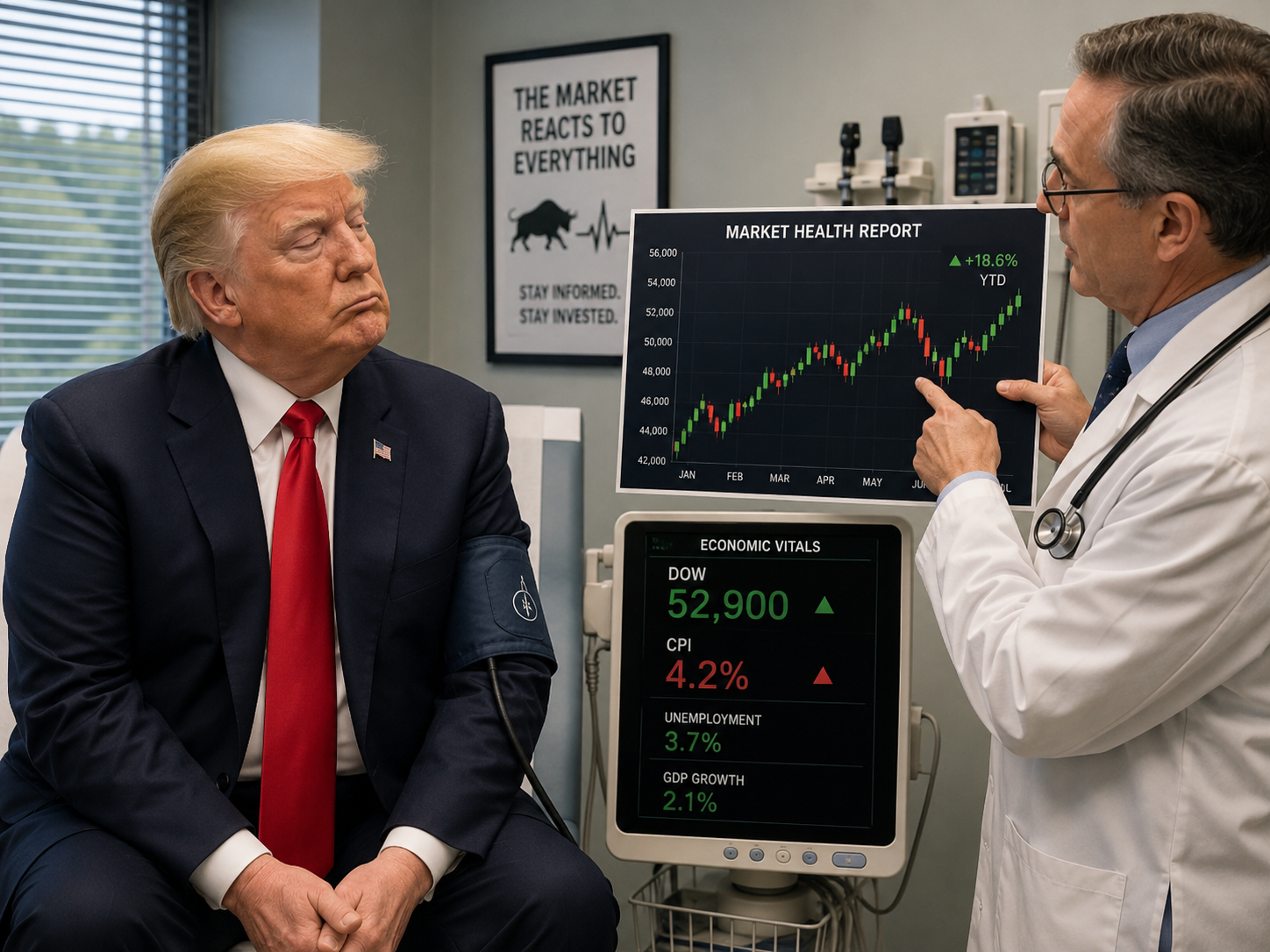
The market just finished its best quarter since 2020. The Dow closed at an all-time high going into the holiday, and yet the average American feels WORSE about the economy than at any point in recorded survey history.
We have witnessed the "K-shape" divergence occurring between the wealthy and the rest. It has been the story of 2026, and it is exactly the kind of disparity that forces retail investors to the sidelines and out of the market, if not squeezed out by the volatility alone. Let us run the full physical on what is actually happening, what history says about midterm years like this one, and how we stay positioned without doing anything dumb.
The Diagnosis
Let's just start with the vitals. The $SPX sits near 7,500 after wrapping the strongest quarter in six years, up roughly 8% for the year. Earnings season has been solid and carrying the market, with about 84% of S&P companies beating first quarter estimates, and operating margins hitting a record near 16%.
Now the symptoms. Inflation printed 4.2% in May, the hottest in three years. The two main culprits were the usual suspects: oil and tariffs. The war with Iran has kicked off the worst global energy crisis in recent memory by choking off the Strait of Hormuz (the narrow waterway that carries about a fifth of the world's oil) since late February. Brent crude touched $114 in early May before cooling. The Supreme Court ruled against the administration's tariffs, but the White House is using loopholes to keep them in place. Meanwhile Jerome Powell has been replaced as Fed Chair by Kevin Warsh. Warsh inherited a market that expected rate cuts and now whispers about hikes instead, and those whispers have stalled the market's progress since mid June.
On deeper examination, this bull market is running on very few arteries. The top 10 companies make up roughly 40% of the entire S&P 500. In a recent one-month stretch, only about 17% of stocks in the index beat the index itself, one of the worst breadth readings (breadth = how many stocks are actually participating in a rally) in a decade. The equity risk premium (the extra return stocks are expected to pay you over safe Treasury bonds) sits near ZERO, among the lowest readings on record. At today's prices, the market is offering you stock market risk for bond market pay.
And the consumer's health? University of Michigan consumer sentiment hit a record low, below every recession trough in the survey's 75-year history. Private payrolls added just 98,000 jobs in June, below expectations. Real wages (pay adjusted for inflation) are negative year over year, squeezing purchasing power. This is a K-shaped economy: the AI buildout and the households who own stocks are doing great, and the rest are not.