
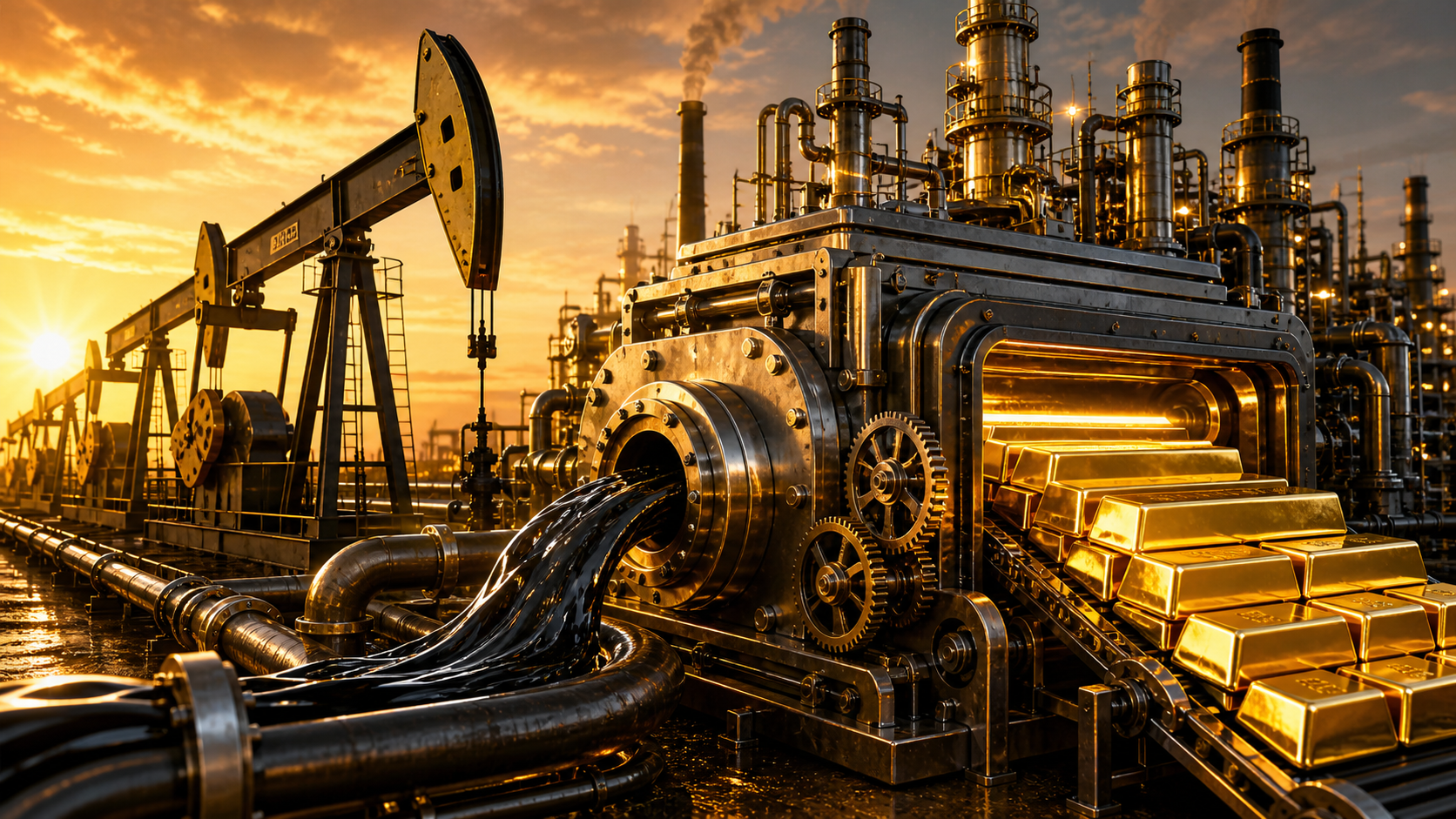
When you start to see a chain of "incidents," it's only natural to look for a pattern. I'm not the conspiracy theory type. But when you stack everything that has happened to global energy supply over the past few months, the math gets uncomfortable. Let's walk through it together.
The News
In January, the U.S. military captured President Maduro and took control of Venezuela. Trump made it clear the move was about oil. He told reporters publicly that he had spoken to U.S. oil companies "before and after" the operation about investing in the country.
He didn't tell Congress. He told the oil companies.
Some oil execs have pushed back to Reuters and said they had no advance knowledge. But Trump's own public statements confirm the conversations happened. Energy Secretary Chris Wright then announced the U.S. would control Venezuelan oil sales "indefinitely." This was always about the oil.
Then in late February, the U.S. hit Iran. Multiple sites across the Gulf were struck. Iran responded by restricting traffic through the Strait of Hormuz, the narrow waterway that handles roughly 35% of the world's seaborne crude oil trade.
When that strait choked, the world choked with it. Oil flows fell from over 20 million barrels a day to under 4 million. The IEA called it the largest oil supply disruption on record. Literally a global energy crisis that has now spread into natural gas.
The "ceasefire" that markets are leaning on? It's expiring. Negotiations are still active. Markets are looking past the risk because of those talks. I'm not buying it yet. Something doesn't add up.
A Pattern of "Incidents"
Then there are the "incidents." Not strikes, not war. Just... things happening to refineries and energy plants all over the world. A LOT of them. Let's stack them up:
That's just what made the news. In two months. Across four continents.
Are some of these accidents? Sure. Refineries are dangerous places and things happen. But all of them? In eight weeks? At a moment when global energy supply is already strained from war and the Hormuz lockdown? When U.S. oil companies just got a shot at Venezuela's reserves funded by tax-payers?
Choking off the world's energy flow has devastating consequences for the global economy. I've talked about this before. The pattern matters more than any single event.
The Breakdown For Us
Here's where it gets interesting for our portfolios.
Brent crude went from $61 a barrel at the start of the year to $118 in Q1. The EIA called it the largest inflation-adjusted oil price increase in data going back to 1988. But here's what most retail investors miss:
EVEN WHEN CRUDE PULLS BACK, GAS PRICES STAY HIGH.
Why? "Crack spreads". That's the difference between what crude costs refiners and what they sell gasoline for. When refining capacity gets tight (and it has been getting tighter for years), refiners pocket more profit per gallon.
The numbers are obnoxious.
All this means is that oil companies are making record margins on every gallon you put in your tank. Even when oil itself drops, refiners hold the line because they CAN. Several U.S. refineries have closed or converted to renewable diesel since COVID. Less capacity means more pricing power for the ones still standing.
So who are the winners here?
Not the consumer. Gas at the pump is climbing. Flights are climbing. Diesel is at almost six bucks. Food prices are getting hit by fertilizer that the World Bank says is up 31% this year.
Oil companies and refiners win. The integrated majors like ExxonMobil and Chevron benefit from higher crude prices. Pure-play refiners benefit even more because their profit lives in the gap between crude and gasoline, not the absolute price of either.
And here's the uncomfortable truth folks. Gas prices are NOT going back to the "old" days (no matter how much they lie about it). When global supply gets disrupted and refining capacity gets cut, the new normal becomes the floor, not the ceiling.
The Portfolio Play
I'm still running 90% long. The broader market has been resilient and I'm not fighting it. But I'm building defensive positioning into energy in case the ceasefire fails or the next "incident" lights another fuse.
Here's what I'm doing:
Chevron
I sold near the highs around $212 and bought back in recently. Chevron is the only U.S. major still operating in Venezuela right now. If U.S. oil companies actually deploy capital there like Trump promised, $CVX is the most direct beneficiary. Strong balance sheet, fat dividend, and diversified across the whole oil value chain.
Vanguard Energy ETF
For diversified exposure across the integrated names, I like adding to a basket. Less single-name risk. Captures the whole sector if crude stays elevated. You don't have to call any one stock right.
Marathon Petroleum
Marathon runs the largest oil refinery in America. $MPC is a direct play on refining margins and the earlier mentioned "crack spreads". This is a different beast than the integrated names. More leveraged to the gas-versus-oil disconnect. When pump prices stay high while crude pulls back, $MPC is the one printing money.
Options
When energy volatility spikes, there are opportunities to sell OTM puts on $XOM or $CVX and use the premium for LEAPS. That's how I built into $XOM LEAPS earlier this year. Volatility is the friend of an options seller. I am still primarily a fan of shares because of the dividends. LEAPS and options miss out on these. Read more on this in my last oil post.
Energy positions are for HEDGING the bigger portfolio. Not replacing it. Keeping them sized appropriately. Keeping speculative names under 10% of the total. Defensive baskets like $VDE can run a bit larger but always within the overall risk budget.
The Bigger Picture
We're being told the situation is contained. That the ceasefire holds. That gas prices will normalize. Am I supposed to just believe what I'm being told by the government? Fool me once...twice...yeah you get it.
The pattern of incidents. The oil companies alerted before Venezuela. The controlled supply being snatched up by the US. The record refining margins. Big Oil is benefiting from all of this and Americans and everyone around the world are getting ripped at the pump.
Position accordingly. Stay long where the strength is. The market is ripping, I get it, but there's something brewing here, and I'm staying hedged.
For those who subscribe to Office Tier or above here at The Clinic, you'll see ALL of my trades on Discord in REAL time.
I know I'm calling out big oil, the lobbyists, and the government here. Somebody has to. At The Clinic we're not afraid to point at what's actually happening. We see the patterns. We follow the money. We position our portfolios accordingly.
Educational purposes only. This post is not investment advice. All investing involves risk including loss of principal. Past performance does not guarantee future results. The publisher may hold positions in securities discussed. Consult a licensed financial professional before acting on anything you read here.