
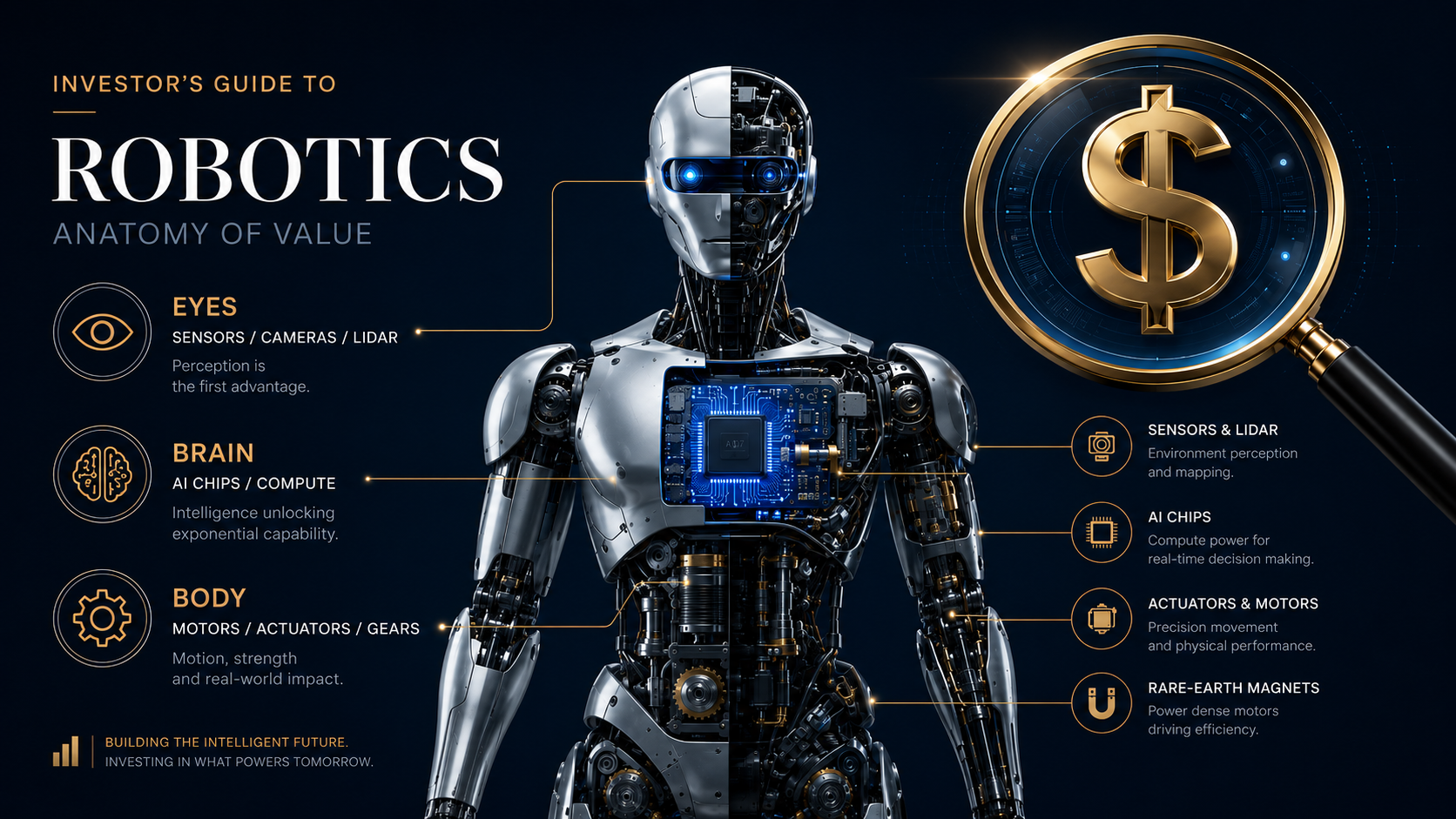
The Robotics Boom
A Retail Investor's Guide To The Robotic Future
Everybody can see that robots are coming like Rosie from The Jetsons. If you didn't hear Elon hyping up Optimus robots replacing everyone including surgeons, you have at least probably watched the videos. A humanoid robot folding laundry. A warehouse where machines move thousands of boxes a night. A surgeon running a whole procedure through a robot's arms. The truth remains that factories continue to grow, and between not enough workers and shrinking margins, robots open the door to greater profit. AI is getting cheaper every year, and now general purpose robots can do many different jobs 24/7 without needing medical benefits or asking for pay raises.
The real question for us as retail investors is how do we invest into this future, especially if our 9-5 jobs are going to get canned.
Most folks will just go after the big robot companies like Tesla, or whatever company hits the news with their dancing robot. That is indeed one way to play it, but that is too basic. The hard part is finding the meat of it all, where the greatest returns lie. This meat is essentially hidden inside these robots. It is the eyes, the brain, and the muscles. For now, we focus on the handful of companies that make those pieces. We call them the CHOKE POINTS or BOTTLENECKS. They are the parts everyone needs, but only a few companies make. Own a choke point and you get paid no matter which robot brand wins. Like the shovel seller in the gold rush analogy, we want to be the smart and profitable investors.
The Diagnosis: Current State of Robotics
One research firm estimated that the robotics market was worth about $108 billion in 2025 and is headed toward roughly $416 billion by 2035. When looking at various other reports, the 2025 number ranged from about $50 billion all the way to $130 billion, and the 2035 number ranged from about $200 billion to over $500 billion.
But instead of focusing on the specific numbers, let's lock in on the part that really matters. The robotics market is real and growing in the double digits every single year for the next decade. Robots will be large and in charge!
Before we figure out where we are going, let's lock in on where we are today. In 2025 there were about 4.7 million industrial robots running in factories worldwide, up around 9% in a single year. Most of those are in China, but even companies like Amazon switched on their one millionth robot in the summer of 2025.
Humanoids are the subset of robots built to take on human tasks. This is pretty new, in that 2025 marked their intro into the market, with roughly 13,000 of them shipped worldwide, mostly from China. Two American companies, Tesla and Figure, each put out around 150. As of today, we are still quite a way from robots taking over mankind. Personally, I think Skynet from the Terminator franchise is a real possibility. Calling it here.
In every robot, there are three choke points.
The EYES (perception and sensing). A robot has to see the world in 3D, judge distance and speed, and not bump into anything. That means cameras, LiDAR (which is basically radar made with lasers), and regular radar.
The BRAIN (compute and chips). All that sensor data must be turned into quick decisions, so it can't have lag time like an LLM sending tokens to a far away data center. This requires special chips that think right there on the robot.
The BODY (motion and actuation). Grabbing and lifting something with the right amount of finesse is essential. We do not need bone crushing force on washing dishes. This takes precise motors, gears, and force sensors.
The Prognosis: Keeping It Real
Let's sort this field into three main groups, because these companies are not all in the same place.
Already working and making money. Warehouse robots and surgical robots are currently bringing in real revenue. For example, Symbotic is automating Walmart's distribution centers right now, while Intuitive Surgical's robots have been used in millions of operations.
Up and coming. The chips and sensors that feed every robot are in a land grab right now. Demand is real and deals are being signed, but some of these companies are still losing money as they race to grow.
Early innings. Humanoid tech is making tremendous strides but is not reliable enough for prime time. Consider Tesla's Optimus, with Elon Musk first saying big production would start in early 2026, and in classic Elon fashion, now the target is the summer. Expect continued push back on the timelines.
If you were to play the entire field with just one company, you could do it with NVIDIA.
We know Nvidia for the chips that power AI, but they also make the key parts for robots. They make the brain chip a lot of robots run on, called Jetson Thor. They make the software that teaches robots how to move, called Isaac and GR00T. They even build the simulated worlds where robots can practice a task a million times before they perform the real one. In June 2026 they went a step further and launched Halos, a full safety system for physical AI.
Nvidia is under the hood of the big industrial robot makers (ABB, Fanuc, Yaskawa), the humanoid startups (Figure, Agility), and even the medical robot players (Medtronic).
This is what makes Nvidia such an interesting play. It captures such a large basket that you do not really have to pick a winner outside of them. Despite being the most valuable company on the planet, Nvidia does not trade at a crazy price for how fast it is growing.
The Meat of Robots
We need to break down the components of the robot to get a sense of the key players.
The ClinicResearch you can inspect. Tools you can use. Profits after expenses support kids and community.